
Mass Timber Insurance Strategy

Accelerating Housing Innovation with DASH
November 20, 2025
Offsite Construction Handbook
November 4, 2025Advancing insurance strategy for mass timber.
Led by Scius Advisory for the Climate Smart Buildings Alliance (CSBA) and the Canadian Wood Council (CWC), the Mass Timber Insurance Strategy identifies key data gaps and research priorities to help insurers accurately assess and price risk for mass timber buildings in Canada.
Recognizing that high construction and occupancy insurance costs remain a major barrier to market growth, the Strategy establishes a list of research that will inform insurers, align national efforts, and ensure new findings are integrated into insurance evaluation processes.
Working closely with insurers, brokers, and technical experts, Scius led the synthesis of interviews and research reviews to pinpoint the areas where evidence can have the greatest impact. These include the methodology, logistics, and cost of repairs following damage — information that is essential to building insurer confidence and expanding insurance capacity for mass timber projects.
While insurance rates are primarily driven by historical claim data, better access to aggregated repair data and realistic testing results will help insurers more accurately assess and price risk. As this evidence base grows, insurance capacity for mass timber projects is expected to expand — ultimately driving down premiums and accelerating the adoption of sustainable construction across Canada.
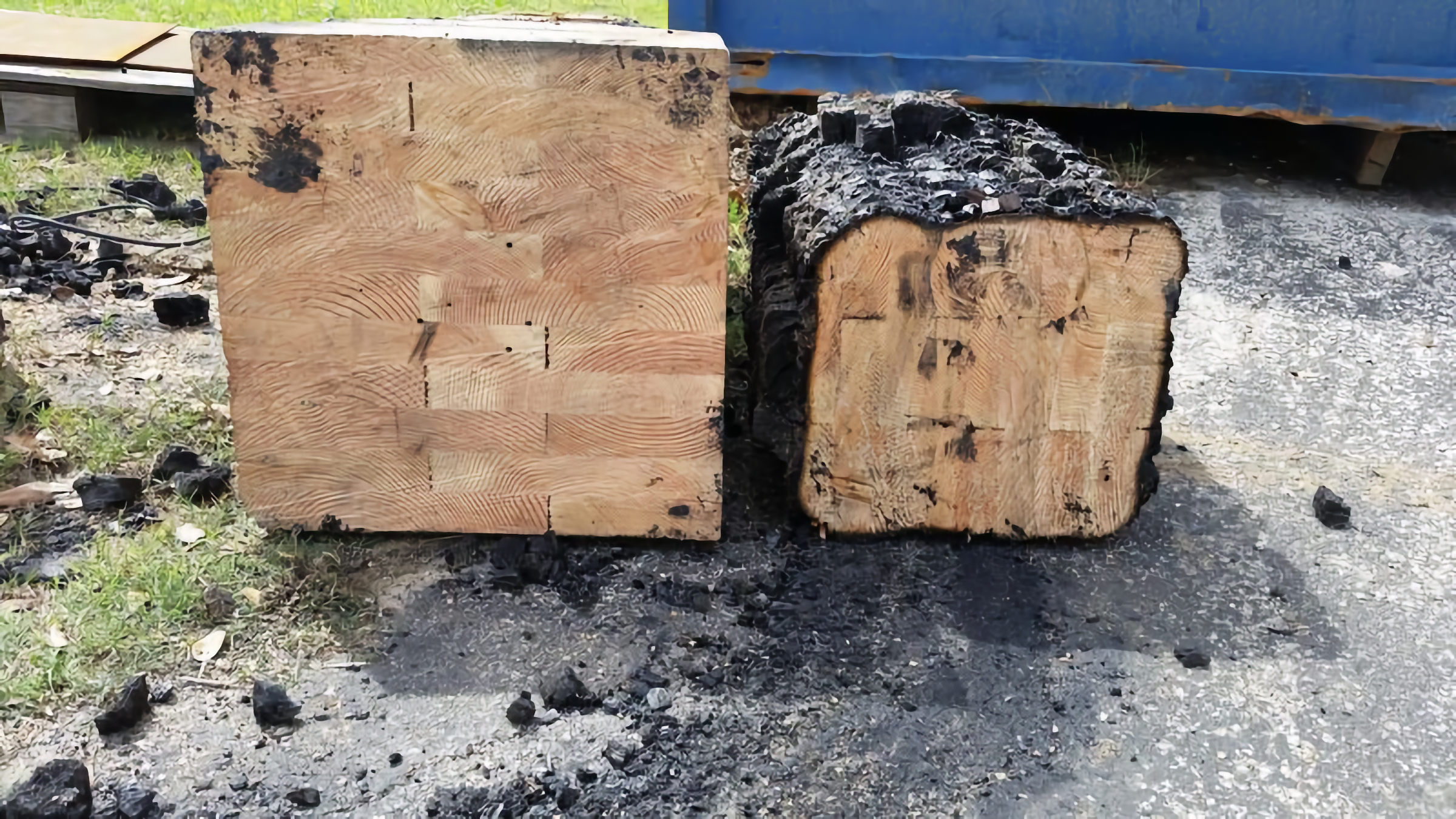
Glulam column before and after 2-hour fire test. Photo: David Barber, Arup
Through this process, the Strategy identified priority areas for further testing, including:
This work aligns with ongoing efforts to decarbonize the building sector, expand industry capacity, and support mid-rise housing solutions that combine efficiency, resilience, and environmental performance. Through research, collaboration, and data-driven strategies, Scius continues to advance practical pathways toward a more sustainable and scalable construction ecosystem.
Download the full Mass Timber Insurance Stategy to read more on how Scius identified gaps and opportunities in existing public research to provide insurers with the data they require to accurately and reliably assess the risks of mass timber construction.