
2026 AI in Construction Report

2026 Electric Construction Report
February 25, 2026
Replicability of GCWood Program Projects
January 13, 2026Growth Driven. AI Powered.
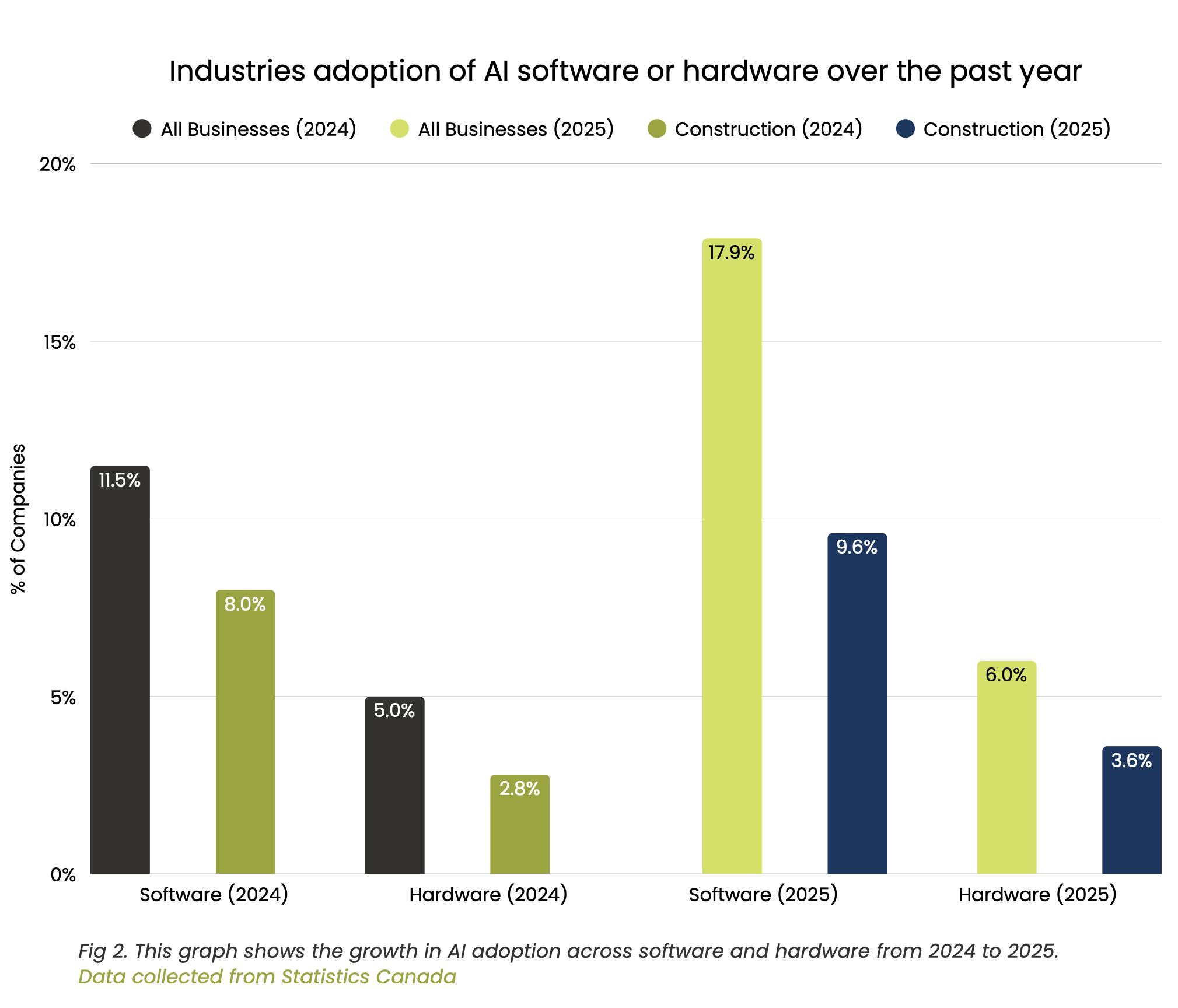
The AI in Construction Report (2026) examines how artificial intelligence is beginning to transform the Canadian construction industry and evaluates the sector’s readiness for broader adoption. While AI uptake in construction remains lower than in many other industries, growing federal investment and expanding venture capital activity signal strong momentum. At a time when the industry continues to face cost overruns, labour shortages, safety risks, and productivity constraints, AI presents a meaningful opportunity to modernize operations and improve long-term performance.
Drawing on interviews with industry professionals and extensive secondary research, the report outlines practical AI applications already delivering value. From predictive cost modeling and schedule optimization to safety monitoring, logistics coordination, BIM integration, robotics, and sustainability analysis, AI tools are demonstrating measurable gains in efficiency, accuracy, and decision-making. These benefits are particularly significant for small and medium-sized firms that could leverage AI to reduce administrative burden and increase competitiveness.
The report also addresses the critical barriers slowing adoption, including fragmented data practices, limited AI literacy, talent shortages, resistance to organizational change, and concerns around cybersecurity and upfront costs. It further examines the environmental implications of AI infrastructure, noting that energy and water impacts can be mitigated through clean energy sourcing and model optimization. Ultimately, the research concludes that coordinated action across industry, government, and technology developers will be essential to unlock AI’s full potential and position Canada’s construction sector for a more productive, resilient, and sustainable future.
Download the full report to read more on: